RESPIRATORY DENSITY AND ITS IMPACT ON SAFETY AT DEPTH

By Luiz Cláudio S Ferreira (DecoStop Nr 64)
 

1. Density and Physiological Safety
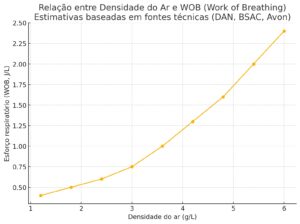
Respiratory density, expressed in g/L, represents the mass per unit volume of a gas mixture. In submerged environments, this density increases proportionally to depth due to the increase in ambient pressure [Fig. 1]. This increase imposes a greater effort on the human respiratory system, increasing resistance to airflow and compromising alveolar ventilation. Difficulty in eliminating carbon dioxide (CO₂) can lead to hypercapnia, a condition that reduces cognitive ability, promotes premature fatigue, and increases the risk of loss of consciousness during diving. This factor becomes critical at depths greater than 30 meters, especially in prolonged technical dives or those performed in confined environments with compressed air or rebreathers. Even experienced divers may exhibit reduced ventilatory thresholds when exposed to high respiratory densities for extended periods.
Fig 1 (Source: Excel Author)
2. Physical Fundamentals and Application in Diving
The density of a breathing mixture can be calculated using the formula:
ρ = (P / R·T) · M
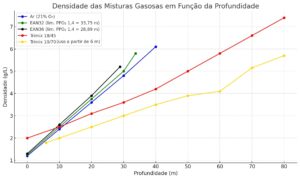
Where: ρ = density, P = absolute pressure (atm), R = universal gas constant, T = absolute temperature (K), M = molar mass of the gas mixture. At sea level, the density of atmospheric air is about 1.2 g/L. At a depth of 30 meters, it reaches 4.8 g/L. Mixtures with helium, such as Trimix, are used to reduce this value, as helium has a lower molar mass than oxygen and nitrogen. This reduction is vital to keep the ventilatory effort within tolerable limits, especially in deep and prolonged operations with rebreathers. In these systems, the resistance of the internal loop and the efficiency of the scrubber directly influence the elimination of CO₂, exacerbating the effects of high density. Density analysis should be performed before defining the breathing gas and depth profile, taking into account the type of circuit and the planned duration of the dive [Fig. 2].
Fig 2 (Source: Excel Author)

3. Operational Implications and Practical Risks
Density values ​​above 6.2 g/L are considered critical in open circuit, and above 5.0 g/L in rebreathers. Breathing equipment must be sized to respond efficiently at depth, with regulators adjusted for optimal flow and minimum inspiratory resistance [Fig. 3] [Fig. 4].

Regarding the efficiency of ventilatory supply, the choice of regulator type directly impacts the total respiratory effort (WOB – Work of Breathing). High-performance balanced regulators maintain the WOB below ~2.0 J/L at 50 m and below ~2.5 J/L even at 100 m, according to tests conducted on ANSTI (Automated National Standards Testing Interface) benches. This makes them suitable for technical diving at depth, even with high respiratory density (sources: dansa.org; en.wikipedia.org; scubaboard.com; divelab.com).
On the other hand, unbalanced regulators, of older design or without internal compensation, tend to exhibit a significant increase in WOB from 30–50m, frequently exceeding the 3J/L limit established by the European standard EN250, and can reach values ​​of 4–5J/L at 100m. This excess compromises effective ventilation and can precipitate the onset of hypercapnia in divers under moderate physical load. EN250 defines this limit under standardized conditions of 62.5L/min at 50m depth, as the maximum acceptable parameter for the certification of recreational and technical equipment (scubadiving.com; xray-mag.com; divernet.com).

In dives carried out at extreme depths, beyond 100 meters, the density of the breathed gas can quickly exceed physiological limits, even with the use of optimized Trimix mixtures. In these operations, in addition to density control, it becomes necessary to apply more conservative gradient factors (e.g., GF 20/85) in decompression models, such as the ZH-L16 with adjustments for bubbles. This is because hypercapnia and ventilatory effort increase CO₂ production and physiological load, requiring more gradual and well-planned ascent strategies. Furthermore, increased density can alter the subjective perception of effort and limit psychomotor performance, being a relevant factor in activities that require rapid decision-making. Advanced training should include simulation of ventilation under high density to prepare the diver for emergencies where the respiratory response may be limited by the density of the mixture itself.
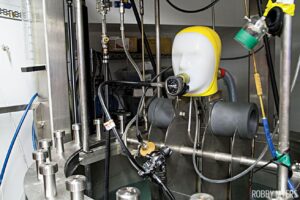
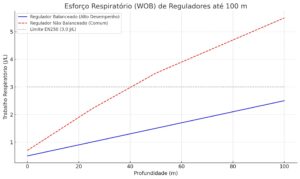
Fig 3 – The ANSTI system is a high-precision test used in the design, development, and evaluation of regulators (Source: Robby Myers)

Fig. 4 (Fonte Excell Autor)

4. Technical Conclusion
Respiratory density cannot be dissociated from the physiological and operational planning of technical dives. Its impact on the ventilatory system requires attention equivalent to oxygen toxicity, nitrogen narcosis, and decompression profile. At greater depths, its interaction with decompression patterns becomes even more relevant, as it directly influences respiratory safety and the effective elimination of inert gases. Including this factor in risk matrices is indispensable for safe operations, reducing the chance of hypercapnia, ventilatory exhaustion, and critical failures in extreme environments. Mastering the concept of respiratory density, combined with the intelligent use of gas mixtures and adjusted decompression algorithms, is essential to safely expand the operational limits of technical scuba diving.

5. References
ANTHONY, T. G. Gas Density and Its Impact on Scuba Diving. ScubaTech Philippines, 2015. Available at: https://www.scubatechphilippines.com. Accessed on: June 27. 2025.
EUROPEAN COMMITTEE FOR STANDARDIZATION (CEN). EN250:2014 – Respiratory Equipment: Open Circuit Self-Contained Compressed Air Diving Apparatus – Requirements, Testing and Marking. Brussels: CEN, 2014.
DAN SOUTH AFRICA. Breathing Resistance in Diving Regulators: Field and Laboratory Analysis. South Africa: Divers Alert Network, 2021. Available at: https://www.dansa.org. Accessed on: 27 June. 2025.
DIVE LAB INC. ANSTI Breathing Simulator Test Reports – Regulatory Performance Data. Panama City, FL: Dive Lab, 2018–2024. Available at: https://www.divelab.com. Accessed on: 27 June. 2025.
MITCHELL, S. J.; DOOLETTE, D. J. Physiology and Medicine of Hyperbaric Oxygen Therapy. 2nd ed. Philadelphia: Saunders, 2015. Chapter: Physiological and Pathophysiological Responses to Hyperbaric Exposure.
NOAA – NATIONAL OCEANIC AND ATMOSPHERIC ADMINISTRATION. NOAA Diving Manual. 4th ed. Flagstaff: Best Publishing, 2002. Chapter on oxygen exposures and PPO₂ limits.
SCUBABOARD TECHNICAL FORUM. Regulator Testing: WOB Values ​​and Field Experiences. ScubaBoard Forum, 2019–2024. Available at: https://www.scubaboard.com/community/threads/regulator-testing-wob-values.575655. Accessed on: June 27, 2025.
WIKIPEDIA CONTRIBUTORS. EN 250 – Scuba Regulator Testing Standards. Wikipedia, The Free Encyclopedia, 2024. Available at: https://en.wikipedia.org/wiki/EN_250. Accessed on: June 27, 2025.
X-RAY MAGAZINE. Regulator Performance and Testing Explained. X-Ray International Dive Magazine, ed. 92, 2020. Available at: https://www.xray-mag.com/content/regulator-performance-and-testing. Accessed on: June 27, 2025.
ANSTI Breathing Machine Test Data – Laboratories such as DiveLab (USA) and Apeks publish validated WOB tables for various models (DiveLab).
EN250 Standard – European standard for certification of self-contained underwater breathing apparatus (Wikipedia).
DAN South Africa and USA – Published works on respiratory effort physiology in technical regulators (DANSA.org).

Certifications:

CMAS Instructor #M3/22/0002
PADI Specialty Diver – Advanced UW Digital Photographer

Warner Versiane

Born in Rio de Janeiro, Warner discovered his passion for diving in 2000, during a trip to Ilha Grande/RJ, where he made his first recreational dive. Enchanted by the experience, he immediately sought training in the sport, completing the Open Water course in the same year. In the following years, he deepened his knowledge and skills by taking advanced courses, consolidating his passion for the underwater world.

The dedication to recreational practice was the foundation for its transition to professional diving. In 2010, he became Dive Master and, in 2018, an instructor for CMAS. Warner is currently part of the Sá Scuba Diving Group (GMES), where he finds his greatest achievement by teaching new divers. Its methodology reflects the commitment to safety and respect for the underwater environment, emphasizing the planning and personal overcoming as pillars for success in diving.

Certifications:

CMAS Instructor #M3/22/0001
PADI Specialty Diver – Advanced UW Digital Photographer

Victor Saldanha Guimarães

Born in Rio de Janeiro, Victor began his diving career in 2012, after a snorkeling experience in Ilha Grande/RJ that aroused his passion for the underwater universe. Motivated by this experience, he completed the Open Water course in March 2013 and then joined the GMES, where he held the Advanced Open Water course in May 2013. The following years were marked by intense dedication to recreational practice, which inspired him to seek new challenges and reach the professional level as Dive Master in 2017.

His professional journey in diving was consolidated in 2021, when he became an instructor for the CMAS (World Confederation of Underwater Activities). Currently, Victor acts as an instructor for the Sá Estacio Diving Group (GMES), where he incorporates the school's values and finds realization when conducting initiation courses, such as Open Water. In line with the methodology of his mentor, he emphasizes personal overcoming and security, believing that the risk should be managed with detailed planning and respect for the underwater environment.

Certifications:

Diver Medic Technician – BMIA Certified
ROV Pilot – UNDERWATER Training & Competence Solutions
Certification ABENDI SM-PE-N2-G – SNQC-31954
Professional Diving Raso – SENAI/RJ
Basic Life Support for Divers – SENAI/RJ
END inspections and advanced measurement techniques by thickness and electrochemical potential.


Hezekiah Pereira Silva

Born in Pará, Hezekiah began his professional career in the Brazilian Army, where he served as Cabo between 2007 and 2015, accumulating experience in discipline, organization and high responsibility operations. In 2014, he entered the professional dive, specializing in underwater inspections and non-destructive testing (END), consolidating his trajectory in underwater engineering and offshore technical support.

Currently, Hezekiah is a Professional Diver for Oceânica Engineering and Consulting S.A., where he performs activities in offshore operations, including inspections of FPSOs (Floating Production Storage and Offloading), pull-in/pullout and maintenance of submerged structures. With ROV (Remotely Operated Vehicle) certifications, electrochemical potential testing techniques and thickness measurement, as well as training as Diver Medic Technician (IMCA Certified), it stands out for its technical accuracy and commitment to underwater safety.

Marco Antônio Soares de Souza

Born in Niterói (RJ), he is an autonomous dive instructor three stars by CMAS, with more than 20 years experience in the area.
In addition to his qualification as an instructor, he has technical certifications in NITROX, Rescue Diver by PADI and Cave Diving by IANTD, highlighting his versatility and dedication to specializations in autonomous diving.
With a vast experience in dives conducted in Brazil and around the world, he has formed numerous divers, always prioritizing safety, respect for protocols and the preservation of the aquatic environment as fundamental and inseparable pillars of the training process.
His passion for diving is inspiring and reflected in the continuous commitment to the formation of conscious and prepared divers.

CMAS Special Instructor #M3/21/006
TDI Cave #224550


CMAS Instructor #M3/21/005
PADI Tec Trimix /DSAT /Public Safe Diver Instructor #297219
SSI Specialty Instructor #54379
HSA Instructor #1-3098
IANTD CCR Megalodon #114922
DAN Instructor #14249
TDI Full Cave #835611

Luiz Cláudio da Silva Ferreira

Born in Rio de Janeiro, he began his career in diving as a cadet of the Military Academy of Black Needles (AMAN), where he graduated from the Army by the Class of 1991. His professional journey in diving was consolidated from 2008 as an instructor by the PADI (Professional Association of Diving Instructors), SSI (Scuba Schools International) and CMAS (World Confederation of Underwater Activities). Since then, it has accumulated technical qualifications, including certifications as a diving instructor adapted by the Handicapped Scuba Association (HSA), public safety diving, rebreather Megalodon specialist and cave diving by the IANTD, among others.
Founder of the Estácio de Sá Diver Group (GMES), finds its main achievement in the initiation cures (Open Water), emphasizing personal overcoming and security. For him, the risk should be managed with meticulous planning and respect for the underwater environment, marks of his methodology.