


Prof. Dr. Marco Antônio Soares de Souza
Rector of the University of Brooms | Doctor in Chemistry | Instructor CMAS M***
Self-driving training should not be treated as a mere instructional phase, but as the most decisive moment in the practitioner's qualification process for adverse and potentially hostile environments. The underwater environment imposes demands that are not negotiable to the human body and that are often unpredictable: current, equipment failures, abrupt temperature variations, pressure perception, low visibility, sudden sensory limitation and psychophysiological overload. In this context, initial training requires not only technical domain, but also structured emotional strengthening based on simulated, controlled and pedagogically oriented experiences.
Therefore, it is inferred that the training or specialization courses, professionals [Fig 1] or even recreational, should adopt as premises both technical rigor and rusticity. — understood not as a margin for arbitrariness or brutality, but as a didactic resource focused on simulation of adversity with clear and controlled pedagogical purpose. This rusticity manifests itself in the careful application of exercises under moderate tension, either through discursive construction or through deliberate use of physical resources that drive the student away from the comfort zone and test his/her self-control, decision-making and emotional resilience. The objective is to expose the practitioner, from the initial stages, to challenges compatible with the requirements of the natural environment.

Fig 1 – Military Diving Training (source: Air Force Reserve Command)
The research conducted by the dive instructor Luiz Cláudio da Silva Ferreira — Brazilian Army officer and responsible for aquatic safety in triathlon and open water swimming tests at the Rio 2016 Olympic Games — it is one of the most consistent studies on the influence of structural variables in the formation of divers, aiming to legitimize the use of elements that challenge the affective area of the student. The research took as universe the students of the introductory course (Open Water), where facing the unknown is more present, and was divided into two phases. In the first, we retrospectively analyzed the performance of students trained in different depths of confined waters, based on 889 technical charts. In the second phase, 80 new students were distributed into two groups of 40: one trained in shallow pool (1.5 m) [Fig 2] and another in depth above (3 to 5 m) [Fig 3]. The central variable was the technical performance in the exercise of "withdrawal, relocation and decaling of the mask" during the first training dive in open water.
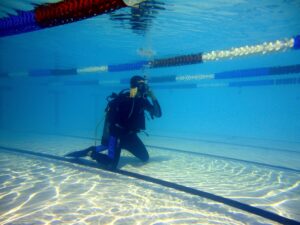
Fig 2 – Withdrawal of a 1.5m pool mask (source: scientific study by Col. Luiz Cláudio)
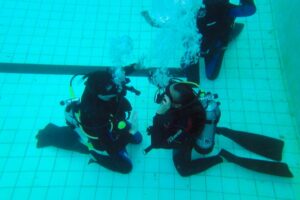
Fig 3 – 5 m pool mask withdrawal (source: scientific study by Col Luiz Cláudio)
The methodology used followed a strict pattern: both groups had the same number of classes, taught by equivalent instructors, with a unified pedagogical script, use of identical equipment and common technical protocol. As control variables, the water temperature and stress measurement were monitored before the mask removal exercise, during sessions in confined waters. The results were statistically significant: 85% success in the shallow pool group and 96.6% in the deep pool group, with no relevant correlation with temperature or previous perception of stress. The data set confirms the hypothesis that the greater depth introduces russticity technique useful for training — as a structured pedagogical resource — by simulating with greater fidelity the real conditions: affective challenge of the largest water column, increased hydrostatic pressure, need for better respiratory control and fine adjustments of buoyancy.
Other studies corroborate this reasoning. Morgan et al. (2020), noJournal of Applied Sport Psychology, demonstrated that training that incorporate blackout simulations and visual restriction increase resilience and technical efficiency in risk sports. Davis & Snyder (2018), when analyzing water military training programs, concluded that the controlled demand progression — with realistic simulations, unexpected tasks and pressure orders — resulted in greater operational safety when applied with supervision and technical rigor.
These findings indicate that controlled rusticity is more than an optional approach: it is a robust pedagogical tool for the formation of divers able to operate in unpredictable environments. In autonomous diving, the objective is not the simulation of extreme situations, but the insertion of small didactic tensions that force the student to integrate technique and emotional balance.
Neglecting this aspect transforms the course into a protocol predominantly of comfort, dissociated from underwater reality. An instructor who avoids any formative stressor prevents the student from developing the ability to respond to the unexpected. On the contrary, the technical rusticity, when legitimized by objective parameters and applied with criterion, consolidates a more conscious, stable and safe practitioner.
In summary, the educational phase of diving should be conducted with methodological excellence, commitment to international standards and calibrated pedagogical rusticity. The cited Brazilian study offers a valuable contribution by demonstrating, with method and evidence, that depth in training can be more than a logistical requirement — can be a critical factor of integral training for the student and employment efficiency of means for the instructor or school. This technical rusticity, far from being synonymous with arbitrary hardness, must be understood as an expression of commitment to reality, security and true preparation of the diver.